

Murata Manufacturing | MLCC, Automotive Components, AI Server Capacitors & MEMS Sensors
2026-06-25
1. Company Profile
Murata Manufacturing Co., Ltd., commonly referred to as Murata, is a world-leading comprehensive electronic component manufacturer. Founded in October 1944 and officially incorporated as a Kabushiki Kaisha on December 23, 1950, its headquarters is located in Nagaokakyo, Kyoto Prefecture, Japan. Established by Akira Murata (1921-2006), the company centers on ceramic technology, specializing in the R&D, production and sales of electronic components and system solutions, whose products are widely adopted across consumer electronics, telecommunications, automotive electronics, industrial control, medical devices and multiple other sectors.
For the fiscal year ending March 31, 2026, Murata recorded record-high revenue of 1.83 trillion Japanese Yen (approximately 915 billion Chinese Yuan), a year-on-year increase of 5.0%, with operating profit reaching 28.18 billion Japanese Yen, up 0.8% year over year. Listed on the Tokyo Stock Exchange (stock ticker: 6981.T), Murata’s stock price surged over 110% within one year as of May 2026, driving substantial market capitalization growth.
2. Industry Position
Murata stands as the absolute global leader in passive electronic components, dominating the Multilayer Ceramic Capacitor (MLCC) market with a 40% global market share, exceeding the combined market share of all competitors. For high-end MLCCs deployed in AI servers, Murata’s market share surpasses 70%, granting undisputed technical discourse power and pricing authority within the industry.
Beyond MLCCs, Murata maintains global leading positions across surface acoustic wave (SAW) filters, RF components, MEMS sensors, inductors and more product lines. Dubbed "the rice of the electronics industry", Murata acts as an irreplaceable core supplier within the global electronics supply chain. The company also delivers outstanding performance in automotive-grade electronic components, supplying high-quality passive component solutions to major global automakers.
3. Development History
3.1 Foundation & Fundamental Technology Accumulation Stage (1944–1970s)
In 1944, Akira Murata launched a private Murata Manufacturing workshop in Nakagyo Ward, Kyoto City, initially producing titanium oxide ceramic capacitors. Starting from 1945, the company launched industry-university research collaboration with Kyoto University to develop new materials for innovative capacitors. Official incorporation as a Kabushiki Kaisha took place in 1950, mass production of ceramic capacitors commenced in 1952, and in 1958 Murata developed the world’s first commercial ceramic filter, laying a solid technical foundation for the company’s subsequent growth.
3.2 Global Scale Expansion Stage (1980–2005)
Throughout the 1980s, Murata accelerated global layout by establishing production bases and sales subsidiaries in South Korea, the United States, Germany, Singapore and other regions. In 1994, Murata opened its first Chinese manufacturing plant in Wuxi, followed by additional factories in Shenzhen and Dongguan to gradually expand its footprint in the Chinese market. During this period, the company focused on technological innovation and capacity expansion of passive components, consolidating its leading global MLCC market position.
3.3 Business Expansion via Strategic Acquisitions (2006–Present)
March 2012: Acquired power amplifier business from Renesas Electronics
July 2012: Purchased US RF component developer and manufacturer RF Monolithics, Inc.
August 2013: Acquired Tokyo Denpa Co., Ltd. to strengthen frequency control product business
2014: Completed acquisition of VTI Technologies to expand MEMS sensor product portfolio
2017: Bought InvenSense to further consolidate its leading position in the MEMS sensor market
2020: Acquired Sony’s lithium-ion battery business to enter the small lithium-ion battery sector
4. Core Product Portfolio & Competitive Advantages
4.1 Core Product Matrix
| Product Category | Representative Products | Global Market Position | Primary Application Fields |
|---|---|---|---|
| Passive Components | Multilayer Ceramic Capacitors (MLCC) | 40% global share; over 70% share for high-end AI server MLCC | Smartphones, AI servers, automotive electronics, industrial control |
| Filters | SAW Filters, BAW Filters | Worldwide Leading | Mobile communication devices, base stations, IoT hardware |
| RF Components | RF Modules, Antenna Switches | Worldwide Leading | 5G communication, smartphones, connected vehicles |
| Sensors | MEMS Accelerometers, Gyroscopes, Pressure Sensors | Worldwide Leading | Smartphones, automotive electronics, wearables, medical devices |
| Inductors | Chip Inductors, Power Inductors | Worldwide Leading | Power management, automotive electronics, industrial control |
| Batteries | Small Lithium-ion Batteries | Rapid Growth Segment | Wearable devices, IoT equipment |
4.2 Core Competitive Strengths
Strong R&D Capability: With over 70 years of accumulated ceramic material technology, Murata owns extensive patents in material formulation and manufacturing processes. R&D investment ratio remains consistently above 5% to sustain technological leadership.
Vertical Integration Capacity: Vertically integrating upstream supply chains including ceramic powder and electrode materials enables Murata to control costs and product quality, shorten product development cycles and rapidly respond to market demands.
Premium Quality & High Reliability: Murata components are renowned for superior quality and long-term stability, especially automotive-grade and industrial-grade products passing rigorous quality certifications to meet customer requirements for extended service life and consistent performance.
Mass Manufacturing Capacity: Operating multiple global production facilities with an annual MLCC output capacity of 5 trillion pieces, Murata satisfies massive global passive component demand while maintaining stable delivery lead times.
Diversified Customer Base: Clientele covers global electronics OEMs, automakers and industrial enterprises across all supply chain tiers, mitigating operational risks from over-reliance on single customers.
5. Core Customer Groups
Murata’s core clients span every segment of the global electronics supply chain, categorized as follows:
Consumer Electronics Segment: Global flagship smartphone brands including Apple, Samsung, Xiaomi, Huawei, OPPO, vivo; consumer electronics giants Sony, Panasonic, LG; smart hardware manufacturers Amazon and Google.
Telecommunications Segment: Communication equipment vendors Huawei, ZTE, Ericsson, Nokia; chip designers Qualcomm and MediaTek; major global telecom operators.
Automotive Electronics Segment: Leading global automakers Toyota, Honda, Nissan, Volkswagen, BMW, Mercedes-Benz; top automotive tier-1 suppliers Bosch, Continental, Denso.
Industrial & Medical Segment: Industrial automation manufacturers Siemens, ABB, Schneider Electric; medical equipment suppliers GE and Philips.
AI & Data Center Segment: Chip makers NVIDIA, AMD, Intel; cloud service providers Google, Microsoft, Amazon, who constitute primary demand sources for Murata’s high-end AI server MLCC products.
6. Global Business Layout
6.1 R&D Centers
Japan: Kyoto Headquarters R&D Center, Yokohama R&D Center, focusing on fundamental materials and core technology development
United States: California R&D Center, specializing in RF technology and communication module R&D
Europe: Germany R&D Center, dedicated to automotive electronics and industrial application development
China: Shanghai R&D Center, developing customized solutions for local market demands
6.2 Production Facilities
Japan: Kyoto, Izumo (Shimane Prefecture) plants, primarily manufacturing high-end MLCCs and filters
China: Wuxi, Shenzhen, Dongguan factories, producing consumer electronics and automotive-grade components
Southeast Asia: Philippines, Vietnam plants, manufacturing mid-to-low tier MLCCs and inductors
Other Regions: Production bases in South Korea, USA, Germany for niche application-specific components
6.3 Sales & Service Network
Murata operates sales offices and technical support hubs across over 100 countries worldwide, building a multi-level authorized agency system consisting of direct OEM sales teams, international top-tier distributors and local core agents to deliver efficient sales and technical support services. Meanwhile, SMCC, a premium spot component supplier, serves small and medium-sized customers with sample requests and small-batch procurement services to satisfy diversified client demands.
7. Supply Chain Support Services
Murata delivers comprehensive end-to-end supply chain services for global customers, including:
Localized Production & Delivery: Leveraging global factory layout to enable local manufacturing and fast shipment, cutting logistics costs and delivery lead times. For China’s new energy vehicle market, Murata launched dedicated automotive-grade production lines in Wuxi plant, shortening delivery cycles to within 2 weeks.
Global Technical Support: Regional technical centers across the globe provide 24-hour technical assistance to resolve product application challenges and optimize hardware design solutions for customers.
Flexible Inventory Management: Customizable inventory programs including consignment stock and safety stock to reduce customer inventory costs and improve overall supply chain efficiency.
Customized Component Solutions: Tailored electronic component solutions including custom specifications and packaging to fulfill differentiated customer application requirements.
Supply Chain Risk Control: Vertical supply chain integration and diversified procurement strategies minimize operational risks and guarantee consistent, uninterrupted component supply.
8. Recent Corporate Updates
8.1 Financial Reports & Performance Outlook
1. Fiscal Year 2025 (ending March 31, 2026) Financial Report: Released April 30, revenue hit a record high of 1.83 trillion Japanese Yen, up 5.0% year over year; operating profit reached 28.18 billion Japanese Yen, a 0.8% YoY increase. While overall growth remained moderate, AI data center business delivered robust performance, with projected annual revenue growth of 84% for this segment.
2. Fiscal Year 2026 (ending March 31, 2027) Performance Guidance: Target revenue of 1.96 trillion Japanese Yen (+7.1% YoY) and operating profit of 380 billion Japanese Yen (+34.8% YoY), both projected to set new historical records. The company attributes growth momentum to "exploding demand for AI data center hardware", with sustained tight supply for high-capacity premium MLCC orders.
8.2 Product Price Adjustment
On March 17, Murata officially announced comprehensive price hikes for AI server and high-end automotive-grade MLCC products, with a price increase range of 15%–35%. The new pricing policy took effect April 1 (based on order receipt date). This large-scale price adjustment marks Murata’s first major price increase in three years, driven by surging demand and constrained production capacity for AI server and premium automotive MLCC lines.
8.3 Capacity Expansion Plans
1. On May 8, Murata unveiled a major new MLCC capacity expansion investment of approximately 80 billion Japanese Yen to be deployed across two fiscal years, targeting a 10%–15% overall capacity boost.
2. Previously, Murata invested roughly 47 billion Japanese Yen to construct a new manufacturing plant in Izumo, Shimane Prefecture, scheduled to launch production in 2026, dedicated exclusively to high-end MLCC manufacturing.
3. The company’s overall capacity utilization rate climbed to nearly 95% (near full capacity) in the fourth quarter, and tight supply conditions with high factory utilization are expected to persist throughout the new fiscal year.
8.4 New Product Innovations
Released April 8, Murata launched mass production of 7 automotive MLCC models achieving the world’s maximum capacitance within their respective voltage and size categories. These new products will enhance stable operation and expand design flexibility for on-board vehicle electronic systems.
8.5 Strategic Partnerships
1. March: Murata established a strategic cooperation agreement with NVIDIA to supply customized high-end MLCC solutions for NVIDIA AI servers, further solidifying its dominant market position in AI server passive components.
2. April: Murata partnered with Toyota Motor Corporation to develop next-generation on-board electronic systems, delivering high-performance automotive-grade MLCCs and MEMS sensors to support Toyota’s vehicle electrification and intelligent transformation roadmap.
9. One-Sentence Murata Company Introduction
Murata Manufacturing Co., Ltd. is the undisputed global leader in passive electronic components, backed by over 70 years of ceramic material technology accumulation and worldwide manufacturing & sales network. Holding monopolistic market share in core products such as MLCC, Murata leverages robust R&D capabilities and vertical supply chain integration to deliver complete electronic component solutions for top global manufacturers across consumer electronics, telecommunications, automotive hardware and AI data center sectors. The company is fully capitalizing on market opportunities brought by AI computing and new energy vehicles to drive a new round of revenue and profit growth.
-
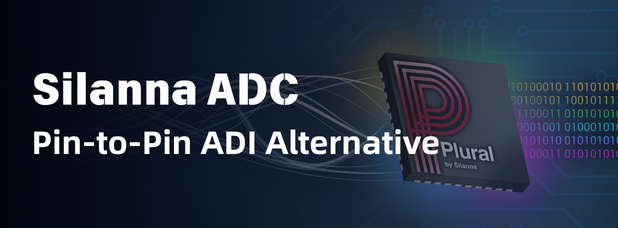
Based in Australia, Silanna Semiconductor leverages extensive expertise in analog chip design and a modular product development platform to deliver a full range of high-speed ADCs. These products cover resolutions from 10 to 16 bits and sampling rates from 20 to 250 MSPS.
-
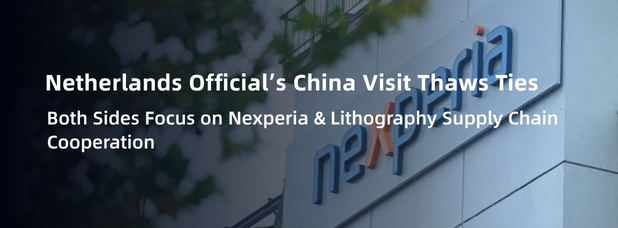
From July 7 to 9, 2026, Sjoerd Sjoerdsma, Dutch Minister for Foreign Trade and Development Cooperation, led a delegation of 17 Dutch enterprises to China, covering sectors including logistics, agriculture, and high technology. Chip giants such as ASML and NXP were among the most closely watched participants.
-

Multi-layer ceramic capacitors (MLCCs) are very common passive components in various electronic products.
-

Nexperia is a global leading manufacturer of basic semiconductor devices, formerly the Standard Products Division of NXP Semiconductors.

Contact 15/F., Tower B, Regent Centre, 70 Ta Chuen Ping Street, Kwai Chung, N. T,Hong Kong TEL:00852-6763-0779 E-mail:sales@superic.com
SOCIAL


Natural resources
