

What is MLCC? AI and New‑Energy Vehicles Reshape Passive Component Demand
2026-08-20
What Are Passive Components?
All electronic components in daily life fall into two categories: active components and passive components.
Active Components: Electronic parts that independently perform computing and signal processing, such as CPUs and various integrated circuits.
Passive Components: They mainly assist and protect active components. They stabilize voltage and filter noise to ensure proper operation of active semiconductors.
Below are the core differences between them:
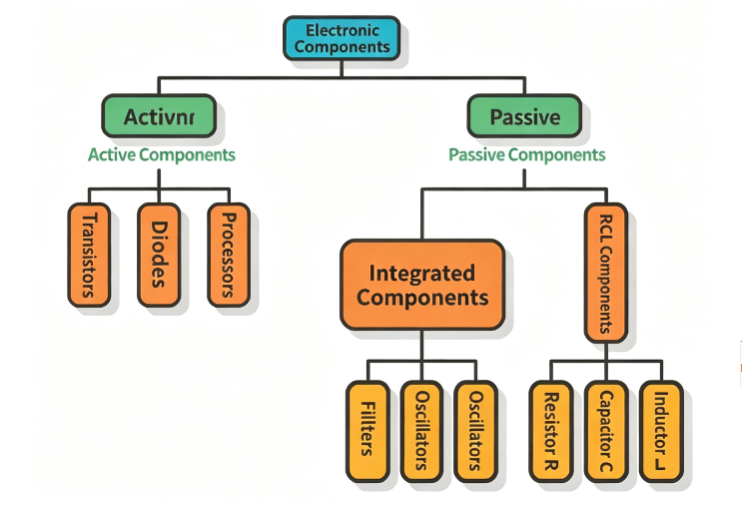
▲ Classification of Electronic Components
Passive components are mainly divided into RCL components and integrated components. RCL stands for Resistance (R), Capacitance (C) and Inductance (L), accounting for roughly 90 % of total passive‑component market value. Integrated components include filters and oscillators, making up the remaining 10 %.
Overview of the Three Major RCL Categories
According to the IMARC global passive‑components report, capacitors take the largest share at 55 % of the total RCL market, followed by resistors (29 %) and inductors (16 %).
1. Resistor (R)
Resistors adjust and stabilize current and voltage within circuits. They can serve as shunts, voltage dividers and matching loads. Resistors are generally grouped into fixed resistors, variable resistors and special‑purpose resistors; fixed resistors see the widest real‑world adoption.
Driven by high‑end applications such as 5G communications and IoT, consumer electronics keep trending toward smaller, thinner and more efficient form‑factors, advancing SMD resistor technology. The market forecasts a 5.2 % annual growth rate for SMD resistors from 2021 to 2027, representing a key growth driver for the resistor segment.
2. Capacitor (C)
Capacitors represent the largest‑volume and most widely‑used category within RCL. Constructed with two metallic electrodes separated by dielectric material, capacitors block DC while passing AC signals. They also deliver signal coupling, temperature compensation, rectification and energy‑storage functions.
Based on dielectric material, capacitors are categorized into ceramic, aluminum electrolytic, film and tantalum electrolytic types. Multi‑Layer Ceramic Capacitors (MLCC) attract the most industry attention: MLCC holds more than 90 % of the ceramic‑capacitor market, over 45 % of the total capacitor market, and exceeds 33 % of the overall RCL market.
Market US data shows the 2025 global capacitor market value breakdown: ceramic capacitors 58.5 %, tantalum capacitors 16 %, aluminum capacitors 15.1 %, others 10.4 %.
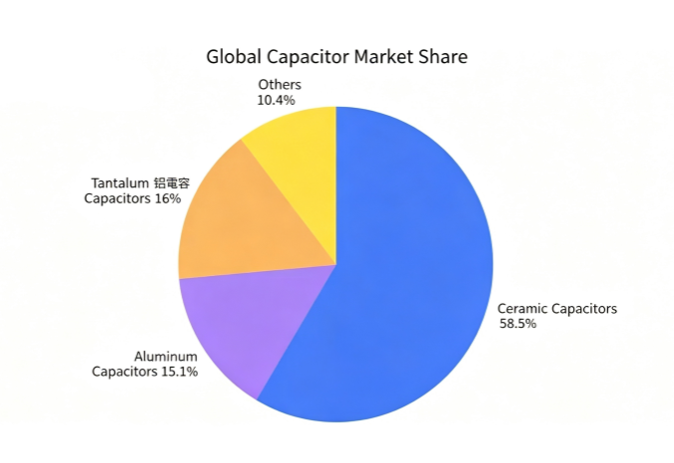
▲ 2025 Global Capacitor Market Value Share (%)
3. Inductor (L)
Inductors are coils typically wound with enameled wire around insulating, magnetic or iron cores. They block AC signals, perform filtering, and form resonant circuits together with capacitors and resistors. As fundamental circuit building blocks, inductors account for roughly 10 %‑15 % of total electronic‑component bill‑of‑materials.
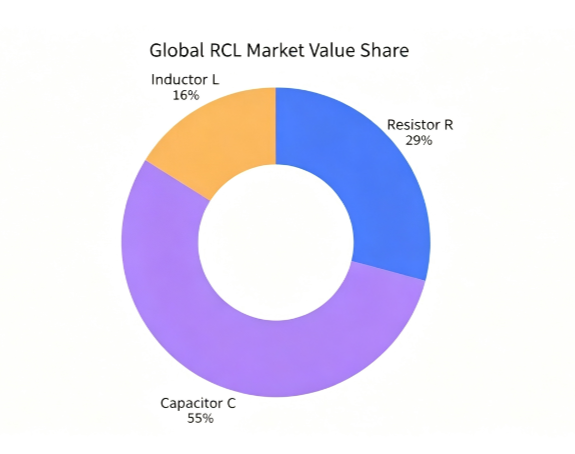
▲ 2025 Global RCL Market Value Share (%)
From a global market‑size perspective, the worldwide passive‑components market is projected to grow from USD 35.89 billion in 2025 to USD 47.84 billion by 2030, demonstrating solid long‑term growth prospects.
What Is MLCC and Why It Has Become a Core Industry Segment
MLCC, short for Multi‑Layer Ceramic Capacitor, is also known as a surface‑mount chip capacitor. Its industry prominence stems from its excellent characteristics: high voltage tolerance, broad operating‑temperature range, low high‑frequency loss, compact footprint, low cost and high stability, making it ideal for mass production.
As electric and autonomous vehicles gain traction, passive‑component demand in automotive applications surges. A traditional combustion‑engine vehicle uses approximately 2 000 passive components, while an EV can consume nearly 10 000 units.
Murata, the global MLCC leader, invested close to USD 1 billion to expand high‑end ceramic‑capacitor capacity back in 2019 while scaling back output of general‑purpose MLCC for PCs and smartphones. Murata’s capacity shift signaled reduced supply for legacy‑grade products, diverting substantial general‑purpose orders toward Taiwanese, Korean and mainland‑Chinese manufacturers, which became a major catalyst for the subsequent MLCC market upturn.
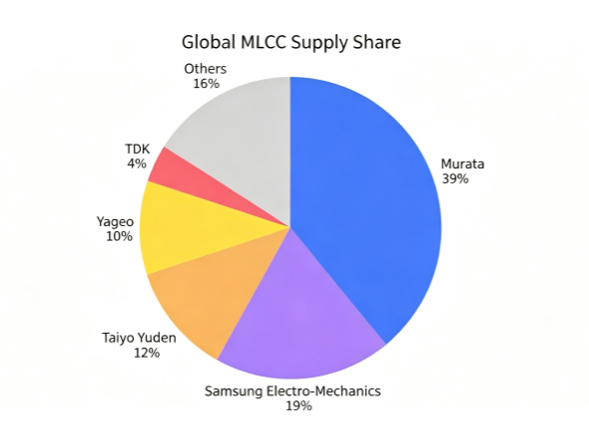
▲ Global MLCC Market Share
Passive Components: Distinct Price‑Cycle Characteristics
Looking back over the past two decades, the passive‑components industry has experienced five major price‑increase cycles:
2003‑2005 : Economic recovery following the US dot‑com bust drove an industry upcycle.
2006‑2008 : Miniaturization of mobile phones, tablets and digital cameras boosted demand for compact, high‑efficiency passive parts.
2009‑2010 : Post‑financial‑crisis global recovery lifted component demand.
2017‑2018 : Japanese official statistics recorded cumulative MLCC export‑price growth of 94 %, triggering massive customer inventory build‑ups and sharp stock‑price gains across the sector.
2021 : Rising demand from EVs and industrial PCs combined with strategic stockpiling by major suppliers created supply‑demand imbalance and pushed up prices across all passive‑component categories.
Passive components feature low unit cost yet extremely high consumption volumes; they protect far more expensive active chips. Even modest unit‑price increases can deliver sizable profit leverage for component manufacturers due to huge volume bases.
Apart from macroeconomic shocks such as market crashes in 2000 and 2008, most major price rallies stemmed from supply‑demand mismatches. The current round of price pressure is mainly fueled by rising raw‑material costs that suppliers cannot fully absorb, leading to renewed price renegotiations.
Outlook for the Passive‑Components Industry
1. Ongoing Component Miniaturization
5G smartphones require more powerful processors while consumers keep expecting thinner, lighter devices. Miniaturization has therefore become an inevitable trend for passive components.
Market‑leading MLCC vendor Murata developed the 0201M‑size, 0.1μF MLCC for 5G handsets. Compared with the previous 0402M component of equal capacitance, mounting area is reduced by 50 % and volume shrinks by around 20 %. Beyond MLCC, resistors and inductors are also advancing toward smaller dimensions and enhanced performance — this will remain a core industry theme.
2. High‑End Demand Surge Driven by Technological Advancements
Global Information projects the worldwide capacitor market will expand from USD 26.7 billion in 2025 to USD 35.56 billion by 2030, representing a 5.89 % compound annual growth rate (CAGR). Growth is powered by three pillars: new‑energy vehicles, 5G infrastructure and AI data centers, breaking the historic pattern where passive‑component cycles closely tracked handset sales.
New‑Energy Vehicles : Global environmental policies accelerate the shift from combustion engines to EVs. A pure‑electric vehicle consumes more than 15 000 MLCC units — over four times the quantity used by gasoline cars. Popularization of 800 V high‑voltage powertrains raises demand for high‑voltage film capacitors and AEC‑Q200 automotive‑qualified components, lifting average selling prices (ASP) for automotive‑grade parts.
5G & Optical Communications : Worldwide roll‑out of 5G and FTTX fiber networks increases demand for high‑frequency, low‑loss MLCC. An estimated 75 % of global data traffic will travel over 5G networks by 2029. Massive‑MIMO antenna arrays create requirements for ultra‑miniature parts such as the 006003 form‑factor (75 % smaller than legacy counterparts), granting premium pricing power to technologically‑advanced suppliers.
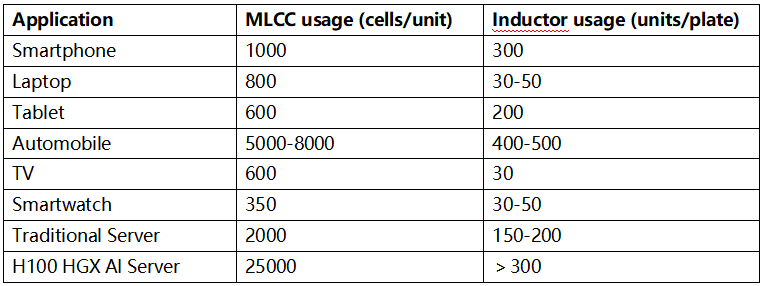
AI Data Centers & Edge Computing : AI accelerators impose strict PCB space constraints, boosting deployment density of high‑reliability ceramic capacitors and polymer aluminum capacitors by roughly 25 %. An AI server consumes 3‑5 times more passive components than a conventional server. The NVIDIA GB200 NVL72 rack alone uses as many as 440 000 high‑end MLCC units. Robust high‑tier demand decouples premium passive‑component segments from consumer‑electronics cyclicality.
Passive‑component consumption across different end‑applications:
Key Global Passive‑Component Manufacturers
The global passive‑components landscape can be summarized as: Japanese firms dominate high‑grade automotive and AI‑grade markets; Taiwanese suppliers hold strong mid‑to‑high‑volume positions; mainland‑Chinese enterprises advance rapid import substitution. Leveraging material‑science and process advantages, Japanese players control premium segments. Taiwanese companies excel at scaled mid‑high‑end mass production. Mainland‑Chinese vendors grow rapidly on the back of local end‑markets, achieving self‑sufficiency in mid‑low tiers while continuously pushing into high‑end domains. Major manufacturers sorted by product category are listed below:
Full‑Range RCL Portfolio
Murata (Japan)
Undisputed global passive‑component leader with approximately 39 % global MLCC market share. World‑class expertise in advanced materials and micro‑miniaturization. Deeply engaged with leading AI‑server and automotive‑electronics customers.
TDK (Japan)
World‑leading inductor manufacturer also offering MLCC, film capacitors and magnetic components. Strong technical moat for automotive, industrial and communication high‑end applications.
Yageo (Taiwan, China)
World’s largest resistor vendor and second‑largest MLCC supplier. Completed tantalum‑capacitor product portfolio via Kemet acquisition. Covers consumer, industrial and automotive scenarios.
Fenghua Advanced Technology (Mainland China)
Mainland China’s only platform‑type manufacturer covering resistors, capacitors and inductors. Domestic leading capacity for MLCC and chip resistors. Products certified to AEC‑Q200 automotive standards.
Multi‑Layer Ceramic Capacitors (MLCC)
Samsung Electro‑Mechanics (South Korea)
Holds around 19 % global MLCC share, ranking second globally. Strong expertise in high‑capacitance and automotive‑grade MLCC, tightly integrated with Korean automotive and consumer‑electronics supply chains.
Taiyo Yuden (Japan)
Top‑tier global MLCC supplier with roughly 12 % worldwide market share. Excels in high‑frequency, high‑reliability MLCC targeting communications and premium automotive markets.
Walsin Technology (Taiwan, China)
Core Taiwanese MLCC player with significant global footprint. Focuses on mid‑high‑end general‑purpose and automotive‑grade products, delivering responsive supply‑chain performance.
San‑huan Group (Mainland China)
Mainland‑China’s largest MLCC revenue generator. Vertically integrated with self‑developed ceramic dielectric powder. Continuous technical breakthroughs for high‑capacitance grades.
Chip & Special‑Purpose Resistors
Rohm (Japan)
Global leader for high‑end resistors. Technology strengths in high‑precision, low‑ohmic and automotive‑qualified specialty resistors. Focuses on high‑margin industrial and automotive markets.
Yeo‑Tai Technology (Taiwan, China)
Major Taiwanese resistor manufacturer, competitive in power resistors and alloy‑resistor niches.
Chip Inductors & Power Inductors
Sunlord Electronics (Mainland China)
Mainland‑China’s dominant inductor maker, ranking top‑3 globally. Strong offerings for automotive and high‑current AI‑server inductors, serving major global end‑equipment OEMs.
Chilisin (Taiwan, China)
One of Taiwan’s “big three passive‑component houses”. Mature technology for molded and high‑frequency inductors, serving consumer, automotive and industrial sectors.
Summary
In recent years the passive‑components industry went through inventory destocking cycles, with growth previously driven mostly by miniaturization within consumer electronics. The explosive rise of new‑energy vehicles, AI computing and 5G communications has rewritten demand dynamics, decoupling the sector from traditional consumer‑electronics seasonality and opening a long‑term growth era led by high‑end applications. EVs multiply per‑vehicle passive‑component consumption, while individual AI racks consume hundreds of thousands of premium MLCC units. Both factors continuously lift industry prosperity and expand application boundaries for passive components.
On supply and pricing fronts, rising costs of raw materials including barium titanate, palladium and silver, alongside major manufacturers shifting capacity toward high‑margin premium lines, create a price‑transmission pattern where high‑end grades lead hikes followed by general‑purpose parts. 2026 is expected to witness moderate price inflation coexisting with selective component shortages. Suppliers with advanced high‑end technology will capture margin expansion and accelerate migration toward high‑value product lines.
From a global‑competition perspective, Japanese vendors retain dominance over premium segments built on accumulated technical know‑how. Korean and Taiwanese manufacturers deliver strong scale advantages for mid‑high‑end mass production. As domestic substitution accelerates, mainland‑Chinese suppliers have achieved decent self‑sufficiency in mid‑low‑end markets and keep advancing into automotive, industrial and AI‑server‑grade product tiers. They are well‑positioned to capture greater market share and realize dual opportunities of technical upgrading and volume expansion amid this industry structural transformation.
-
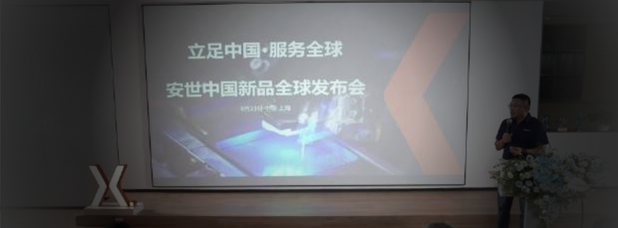
On August 23, 2026, Nexperia China held its first new‑product launch event with core management in attendance following the supply‑chain turmoil.
-

All electronic components in daily life fall into two categories: active components and passive components.
-
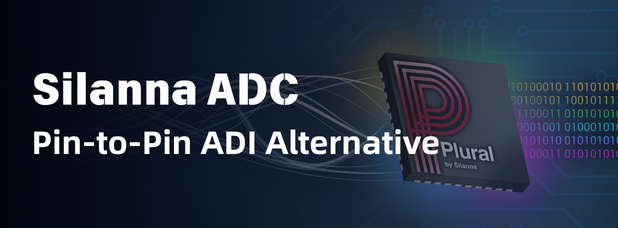
Based in Australia, Silanna Semiconductor leverages extensive expertise in analog chip design and a modular product development platform to deliver a full range of high-speed ADCs. These products cover resolutions from 10 to 16 bits and sampling rates from 20 to 250 MSPS.
-

From July 7 to 9, 2026, Sjoerd Sjoerdsma, Dutch Minister for Foreign Trade and Development Cooperation, led a delegation of 17 Dutch enterprises to China, covering sectors including logistics, agriculture, and high technology. Chip giants such as ASML and NXP were among the most closely watched participants.

Contact 10Marina Boulevard #47-01 Marina Bay Financial CentreTower 2 Singapore 018983 TEL:00852-6763-0779 E-mail:sales@smartcore-cloud.com
SOCIAL


Natural resources
