

From Crisis to Leadership: How Nexperia China Rebuilt its Power‑Semiconductor Supply Chain from the Ground Up
2026-08-28
On August 23, 2026, Nexperia China held its first new‑product launch event with core management in attendance following the supply‑chain turmoil. After 330 days, the global power‑semiconductor leader, once hit by wafer shortages and system disconnections caused by Dutch‑government‑led intervention, officially unveiled the outcomes of its localised restructuring. By building a self‑controlled local operation and supply‑chain ecosystem and launching its 12‑inch advanced wafer platform, Nexperia China has fully emerged from the crisis. It has achieved comprehensive upgrades in R&D, mass‑production capacity, product delivery and cost‑efficiency, completing a strategic shift from passive risk exposure to proactive market leadership.
I. Background of the Crisis: External Intervention Disrupted Supply Chains, Creating an “Order‑Backlog Without Wafers” Dilemma
Acquired by Wingtech Technology in 2019, Nexperia is a world‑renowned supplier of automotive‑grade power discrete devices with a historically strong global market share in automotive components. On 30 September 2025, the Dutch Ministry of Economic Affairs issued intervention measures citing national‑security concerns, freezing assets and intellectual property rights of more than 30 Nexperia‑affiliated entities worldwide. In October 2025, the Dutch headquarters cut off wafer supplies to the Dongguan packaging‑and‑testing site in China, while disabling access to business systems and overseas data channels for the China‑based team.
This external intervention triggered severe operational disruption. Nexperia China found itself in a difficult position: it retained its engineering teams, end‑customer base and signed purchase orders, yet lost access to critical raw‑material wafers. To safeguard its legitimate interests, Wingtech Technology filed a lawsuit at the Dongguan Intermediate People’s Court under China’s Counter‑Foreign‑Sanctions Law, claiming compensation of 8 billion RMB from Nexperia Netherlands, and initiated international‑arbitration proceedings in the Netherlands. To date, legal and arbitration cases remain unresolved, and governance disputes are still pending.
Rather than waiting passively for restoration from overseas, Nexperia China launched a comprehensive self‑rescue and local‑restructuring programme. On 29 May 2026, the company announced the completion of its independent‑operation framework, with core management, R&D and marketing teams fully based in mainland China and granted complete autonomous decision‑making authority. It quickly partnered with multiple domestic wafer manufacturers and built a diversified, self‑reliant supply‑chain network supported by its Dongguan test‑and‑assembly facility, completing local substitution for critical semiconductor‑supply links.
The local‑restructuring results exceeded industry expectations. Less than one month after overseas‑wafer supplies were suspended, product shipments resumed. Only five months later, mass‑production began on its 12‑inch power‑semiconductor platform. Today, the localisation rate of its power‑device manufacturing supply chain has risen from under 20 % to nearly 100 %. A fully domestic supply‑chain loop is now operational for MOSFETs and logic ICs, while bipolar transistors are scheduled to close their full local‑supply loop by the end of this year.
II. Strong Operational Performance: Breakthrough Improvements in Delivery, R&D and Production Efficiency
According to data disclosed at the launch event, over the past 11 months Nexperia China has shipped more than 40 billion chips to thousands of global customers without major batch‑quality incidents, maintaining stable product quality and reliable order fulfilment.
Major efficiency gains have been delivered under the new localised operating model. The production ramp‑up cycle has been shortened from the previous 12‑16 weeks under the overseas system to just 4‑6 weeks. The full‑product R&D iteration cycle has been reduced from a maximum of 36 months to 9‑12 months, with over 10 000 completed and in‑development device SKUs, marking significantly accelerated product refresh rates.
Delivery speed has become a key competitive advantage. Supported by its new production lines and local supply‑chain ecosystem, lead‑times for selected automotive‑grade products have been cut to approximately five weeks, compared with an industry‑wide average of 40‑50 weeks for competing parts. This fast‑turnaround capability meets the rapid‑update requirements of the automotive sector.
A cornerstone of this transformation is the newly commissioned 12‑inch power‑semiconductor wafer platform. Compared with traditional 6‑inch and 8‑inch fabrication lines, the usable surface area of a 12‑inch wafer is substantially larger: the 8‑inch wafer delivers 2.25 times the area of a 6‑inch wafer, while the 12‑inch wafer offers 4 times the area. Each wafer yields far more die, laying a solid foundation for cost reduction and productivity improvement.
Based on internal estimates, the 12‑inch platform can lower per‑unit costs of power MOSFETs by roughly 30 %. Lithography precision has improved by 30 % versus 8‑inch production, while intra‑wafer parameter variation has narrowed from 10 % to under 5 %. A fully automated material‑handling system has reduced production‑process defect rates by 20 %, with mature‑process yields reaching 99 % — well above the 89‑94 % yield range typical of older 8‑inch facilities. The new lines are certified to AEC‑Q automotive standards and IATF 16949, supporting wide‑temperature‑range operation from −55 °C to 175 °C. The Dongguan assembly‑and‑test site implements strict PPB‑level quality‑control protocols, fully meeting high‑end automotive and industrial application requirements.
III. Expanded Product Portfolio with Strategic Focus on Automotive‑Grade, AI‑Server and High‑Value Segments
Leveraging its advanced 12‑inch platform, Nexperia China follows the “China for China, China for Global” strategy. While deepening its presence in the domestic market, it continues to serve international clients, with components already integrated into supply chains of major global automakers including BYD, Tesla, BMW, Volkswagen and Bosch. R&D and manufacturing resources are prioritised for high‑growth, high‑value sectors such as smart vehicles, AI servers, photovoltaic renewable energy and industrial control. The company adheres to its dual positioning: global automotive‑grade quality standards combined with rapid local customer support.
Three core business divisions drive a robust new‑product pipeline:
Bipolar Discrete Devices: R&D cycles have been shortened from six months to three months. 18 major product platforms with more than 400 variants are now in mass‑production or under development, with over 400 parts expected to reach volume production by year‑end. Small‑batch production on the domestic 12‑inch line began in March 2026, and bipolar transistors, Schottky diodes and ESD‑protection devices successfully passed automotive‑grade qualification in June, enabling large‑scale vehicle‑manufacturer supply.
Power MOSFETs and IGBTs: The mature T6/T9 platforms are being continuously upgraded, alongside the new‑generation SGT T2x technology. 40 V T2x devices are now in mass‑production, while 80 V variants are under development, with further 80‑100 V SGT products to follow. Within the same package footprint, T2x devices deliver twice the current‑carrying capability of the legacy T6 series, with a benchmark on‑resistance as low as 0.48 mΩ, reaching top‑tier global performance. The new FS8‑platform 1200 V IGBT offers switching losses approaching SiC‑device performance, delivering an optimal balance of high performance and cost‑effectiveness for medium‑to‑high‑voltage applications including AI data centres and industrial power systems.
Logic ICs: Built on the 12‑inch 0.15 μm mature‑process platform, 1300 logic‑IC part‑numbers are currently in mass‑production. Under the roadmap, an additional 900 SKUs will launch in Q3 2026, followed by 1700 more in Q4 2026, bringing the yearly total close to 3000 new parts to fully replace legacy product lines. The low‑noise, low‑latency HCS logic series has been deployed in new‑energy vehicles, AI servers and edge‑computing hardware.
IV. Differentiated Pricing and Technological Breakthrough Reshape Industry Competition
While many power‑semiconductor suppliers have raised prices by 15‑20 %, Nexperia China has taken a differentiated market approach, passing on productivity gains from its 12‑inch‑fab upgrade through voluntary price reductions, without relying on government subsidies. Selected power‑semiconductor components from the 12‑inch platform have seen price cuts of up to 30 %, and general‑purpose logic ICs reduced by more than 20 %. The company is capturing high‑end market share through competitive pricing, proven quality and fast‑order fulfilment.
Driven by rapid expansion in AI infrastructure, power‑system hardware is shifting toward multi‑megawatt power levels and 800 V high‑voltage DC architectures. Every 1 % improvement in power‑supply efficiency can save large‑scale data‑centre operators millions of US‑dollars in annual operating costs. To meet the demands of high‑performance AI compute hardware, Nexperia China has released dedicated components including the NEXH5890 wide‑voltage high‑power hot‑swap controller, the N83X88 PFC controller and the 1200 V FS8 IGBT. These devices reduce the number of peripheral components required, shrink PCB footprint and increase overall power density. Its MOSFETs, diodes and ESD‑protection parts have entered the supply chains of leading global OEMs building AI servers and AI‑PC hardware. The MOSFET content‑value per AI‑server unit is 5‑10 times higher than that of traditional cloud servers.
V. Innovative Business Model and Industrial Segmentation Pave the Way for Independent‑Growth Strategy
In response to the shutdown of overseas IT systems and distribution channels, Nexperia China has rolled out a dual‑driven growth model combining its 12‑inch advanced‑capacity programme with digital online sales. Through its official manufacturer store and authorised e‑commerce partners, customers benefit from transparent real‑time inventory visibility, 24‑hour shipping, online component‑selection tools and professional technical support to efficiently serve small‑to‑medium‑volume clients. Large custom high‑end projects continue to be handled via offline distributor partnerships, balancing high‑volume and customised market requirements. The first batch of eight MOSFET products launched online was priced 30 % lower than previous equivalents, delivering strong market competitiveness.
Following the supply‑chain crisis and local‑restructuring process, a clear operational divide has emerged across the Nexperia ecosystem. Production sites managed by the Dutch headquarters in Europe continue to rely on older‑generation 6‑inch and 8‑inch fabrication lines, with no 12‑inch advanced power‑semiconductor capacity deployed. In contrast, Nexperia China has completed a fully‑closed‑loop industrial system covering 12‑inch front‑end wafer manufacturing, Dongguan‑based packaging‑and‑testing and digital‑distribution services, removing dependence on overseas supply chains.
Zhang Qiuming, CEO of Nexperia China, stated that amid global supply‑chain shifts and technology restrictions, the company chose proactive restructuring and self‑reliant upgrading rather than passive waiting. “Without supply‑chain autonomy, industrial security cannot be guaranteed. This is not confrontation — it is progress and industrial upgrading.” Moving forward, Nexperia China will keep investing in its domestic industrial ecosystem. Supported by advanced manufacturing capacity and accelerated delivery cycles, it will continue supplying stable, high‑quality power‑semiconductor devices to automotive, AI, industrial‑control and renewable‑energy customers worldwide, contributing to the secure, high‑quality development of China’s domestic power‑semiconductor sector.
-
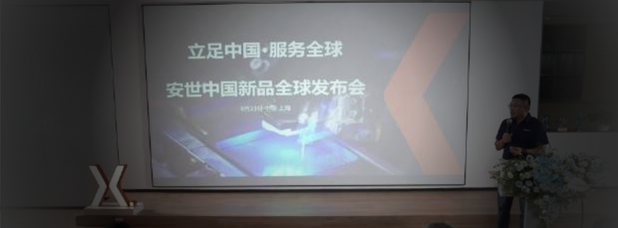
On August 23, 2026, Nexperia China held its first new‑product launch event with core management in attendance following the supply‑chain turmoil.
-

All electronic components in daily life fall into two categories: active components and passive components.
-
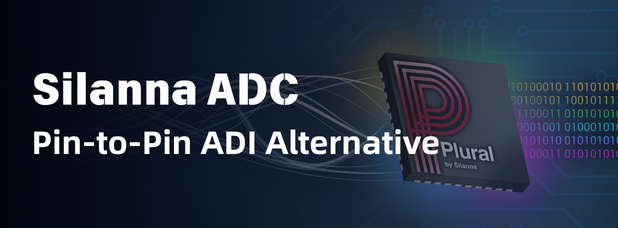
Based in Australia, Silanna Semiconductor leverages extensive expertise in analog chip design and a modular product development platform to deliver a full range of high-speed ADCs. These products cover resolutions from 10 to 16 bits and sampling rates from 20 to 250 MSPS.
-

From July 7 to 9, 2026, Sjoerd Sjoerdsma, Dutch Minister for Foreign Trade and Development Cooperation, led a delegation of 17 Dutch enterprises to China, covering sectors including logistics, agriculture, and high technology. Chip giants such as ASML and NXP were among the most closely watched participants.

Contact 10Marina Boulevard #47-01 Marina Bay Financial CentreTower 2 Singapore 018983 TEL:00852-6763-0779 E-mail:sales@smartcore-cloud.com
SOCIAL


Natural resources
