

Samsung & SK Hynix Q1 2026 Earnings Surge Amid Skyrocketing Memory Chip Prices
2026-05-21
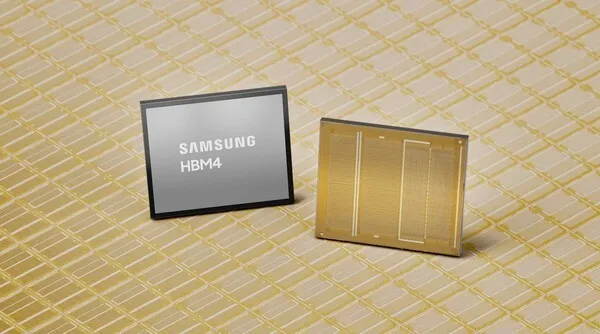
Amid a sharp surge in memory chip prices, Samsung Electronics and SK Hynix both achieved strong revenue and profit growth in the first quarter of 2026, with both companies disclosing significant price trends for the period. According to Samsung’s full financial report released on May 15, the average selling price of memory chips including DRAM and NAND soared approximately 146% compared to the full-year average price in 2025.
While Samsung did not separately disclose price changes for DRAM and NAND, it highlighted the core growth drivers: strong and sustained demand for high-performance DRAM such as HBM4 and DDR5, as well as NAND flash for high-capacity solid-state drives in the memory business under its Device Solutions (DS) division.
SK Hynix, which released its earnings report on the same day, disclosed that its DRAM chip shipments were roughly flat quarter-on-quarter, driven by continuous price increases of mainstream DRAM, with its average selling price (ASP) rising around 65% quarter-on-quarter.
The price increase of NAND flash was even more pronounced. The company stated that NAND chip shipments decreased by approximately 10% quarter-on-quarter, but thanks to broad-based price increases across its product lines, its average selling price surged around 75% quarter-on-quarter.
Soaring Storage Costs Reshape Samsung DX Division’s Procurement Structure
The skyrocketing memory chip prices are a double-edged sword for Samsung Electronics. The financial report showed that the cost of mobile storage for end products in its DX (Device eXperience) division rose approximately 107% compared to the full-year average price in 2025.
According to ZDNet, Samsung Electronics DX Division included "mobile storage" in its raw material procurement list for the first time. In the first quarter of 2026, mobile storage accounted for 9.4% of the division’s procurement structure, slightly higher than the 8.9% for camera modules but lower than the 19.9% for mobile application processors (APs) and 10.2% for display panels.
ZDNet further noted that the DX Division’s total procurement reached 1.993 trillion KRW (approximately 10.3 billion RMB) in the quarter, with U.S. memory chip maker Micron being one of its core suppliers.
R&D Investment Surges, Accelerating Development of HBM4 and HBM4E
According to The Elec, a South Korean electronics industry media outlet, Samsung and SK Hynix’s R&D investment increased by up to 68% year-on-year in the quarter, highlighting intensifying competition in the AI memory chip sector.
Samsung’s Q1 financial report showed the company’s total R&D expenditure reached 11.34 trillion KRW, up 25.5% year-on-year; capital expenditure amounted to 11.23 trillion KRW , of which 90.7% (10.19 trillion KRW) was allocated to the DS division. The Elec revealed that Samsung plans to invest over 110 trillion KRW in capital expenditure and R&D this year, focusing on advancing AI semiconductor technology and expanding into emerging businesses such as robotics through mergers and acquisitions.
Notably, Samsung highlighted HBM progress in its earnings report: HBM4 products based on the 10nm-class 1c DRAM process entered mass production and shipment in February, with its base chip manufactured using the 4nm process at Samsung’s foundry division. According to The Elec, Samsung is concurrently developing HBM4E, with the first samples expected to be delivered in the second quarter of 2026.
SK Hynix’s Q1 R&D investment stood at 2.55 trillion KRW a sharp 68.3% year-on-year increase from 1.52 trillion KRW in the same period last year, accounting for 4.9% of its total quarterly revenue of 52.58 trillion KRW . The Elec pointed out that the company’s quarterly R&D investment exceeded 2 trillion KRW for the first time in the fourth quarter of 2025; between 2022 and 2024, its average quarterly R&D investment was approximately 1.11 trillion KRW .
SK Hynix unveiled its HBM structure model. (Photo credit: SK Hynix)
In addition, SK Hynix is also developing the HBM4E product line, planning to deliver samples in the second half of 2026 and begin mass production in 2027. Reports indicate the product’s base chip will adopt a customized process tailored to customer performance requirements, while the core chip will use its self-developed 1c DRAM process node.
-
Amid a sharp surge in memory chip prices, Samsung Electronics and SK Hynix both achieved strong revenue and profit growth in the first quarter of 2026, with both companies disclosing significant price trends for the period.
-
In the age of AI advancement and data explosion, NAND Flash is the tiny yet indispensable chip powering our digital lives.
-
Intel Corporation, founded on July 18, 1968 by Gordon Moore, Robert Noyce, and Arthur Rock in Mountain View, California, is headquartered in Santa Clara, California. Originally named NM Electronics, it was later renamed Intel, short for "Integrated Electronics".
-
Micron Technology, founded in 1978 and headquartered in Boise, Idaho, USA, is one of the world’s top three memory chip manufacturers, alongside Samsung and SK Hynix.

Contact 15/F., Tower B, Regent Centre, 70 Ta Chuen Ping Street, Kwai Chung, N. T,Hong Kong TEL:00852-6763-0779 E-mail:sales@superic.com
SOCIAL


Natural resources
